
Time-normalized evapotranspiration reveals substantial nighttime water loss in a controlled-environment system
Key Words: Nighttime evapotranspiration • Time-normalized ET • Day–night ET partitioning • Controlled-environment agriculture • Space agriculture • Root-zone moisture sensing
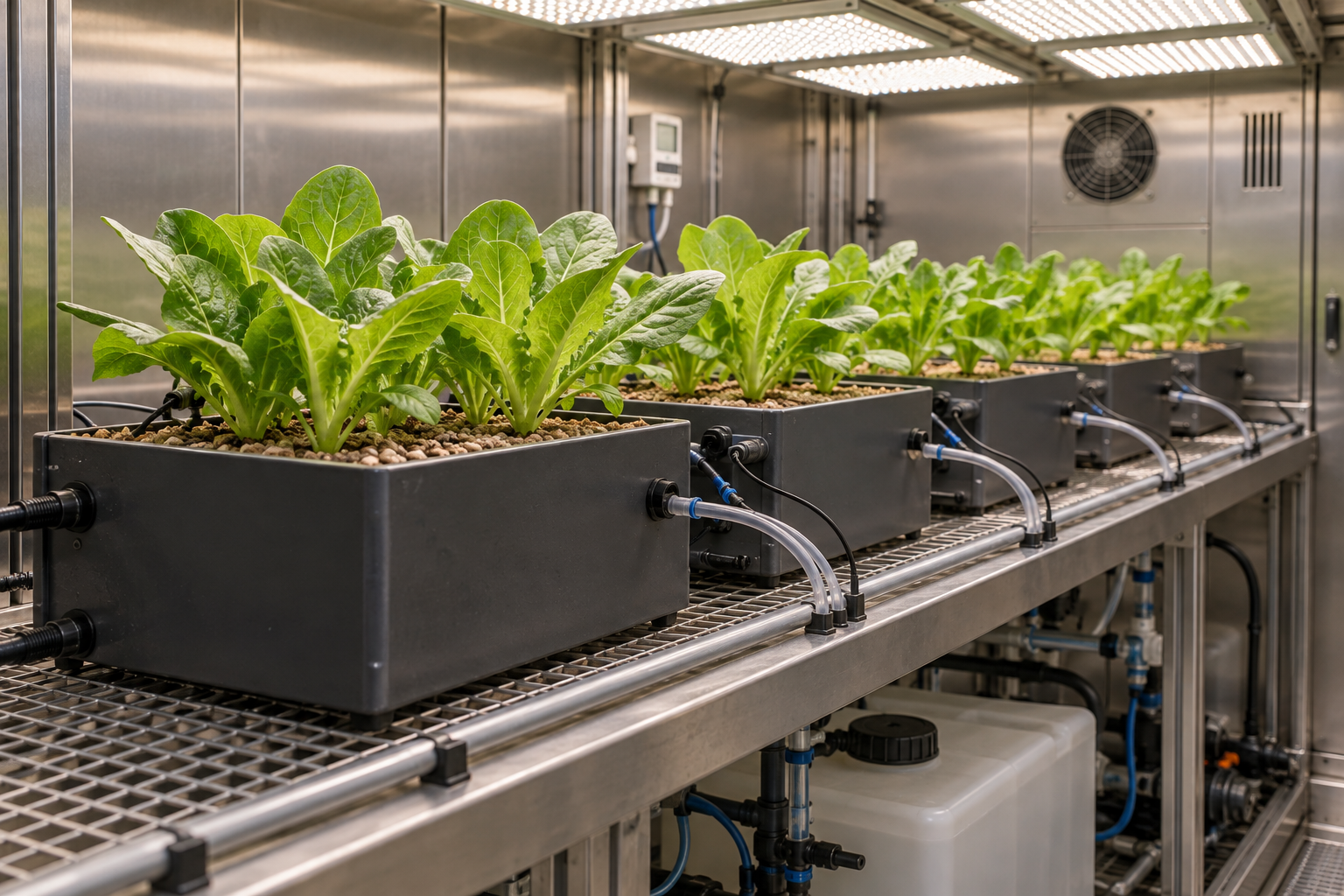
The study, published in Smart Agricultural Technology and co-authored by West Point faculty member Sarah Schreck, examines how water loss from plants and their growing medium changes between day and night in a controlled growing system designed to operate without discharging water. Researchers used moisture sensors in five root modules to track water loss as seedlings grew, finding that total daily water loss increased from less than one liter to approximately three liters by day 12. During rapid growth, water loss was highest during the day but continued at substantial rates overnight. Although nighttime water loss totaled only 28 percent of daytime loss, the average hourly nighttime rate was 46 percent of the daytime rate. This distinction shows that daily totals alone can understate the intensity of nighttime water loss because they also reflect the length of day and night. By accounting for those differences, the study offers a clearer way to assess nighttime water use that could help improve water budgeting and humidity control in enclosed growing environments.
To cite this article: Garrido-Ruiz, C., Bugbee, B., González-Teruel, J. D., Schreck, S., & Jones, S. B. (2026). Time-normalized evapotranspiration reveals substantial nighttime water loss in a controlled-environment system. Smart Agricultural Technology, 102612. https://doi.org/10.1016/j.atech.2026.102612
Want to know more? Click here to read the full paper!