
AEGIS We put the land in land warfare.
FEATURED ANALYSIS
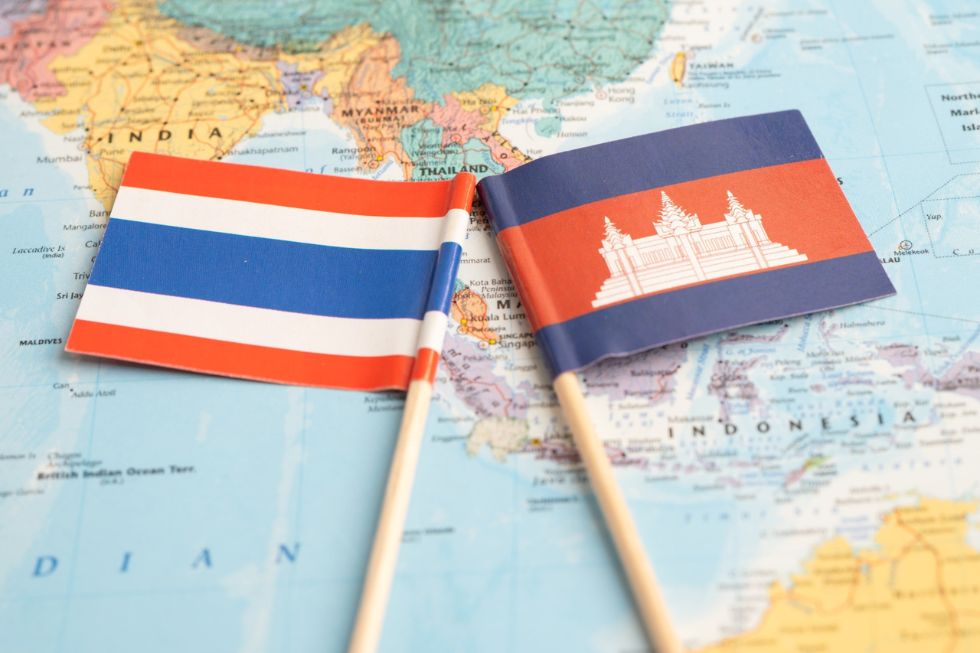
The Geography of the 2025 Cambodia-Thailand Border Conflict
RECENT ANALYSIS
One year after the initial fatal skirmishes and artillery exchanges during the summer of 2025, the Cambodia-Thailand border remains a highly volatile flashpoint in Southeast Asia. While active combat has paused under a ceasefire, the brief conflict resulted in significant geographic changes: legacy and newly laid anti-personnel landmines continue to disrupt production on important agricultural land, border infrastructure closures remain stiffly in place, and more than half a million civilians face protracted displacement. This analysis evaluates the military escalation along the Cambodia-Thailand border through a geospatial and environmental security lens, mapping the structural friction underlying the confrontation. By integrating historical cartography, terrain modeling, and satellite imagery, the study examines how a century-old French colonial mapping discrepancy along the Dângrêk Mountains’ natural watershed created overlapping territorial claims that modern legal frameworks have failed to reconcile. The research details how the region’s rugged escarpments, dense jungle corridors, and disputed cultural heritage sites like the Preah Vihear and Ta Muen Thom temples dictate local military maneuvers, transform historical architecture into tactical high ground, and amplify human displacement along critical logistical and environmental corridors.
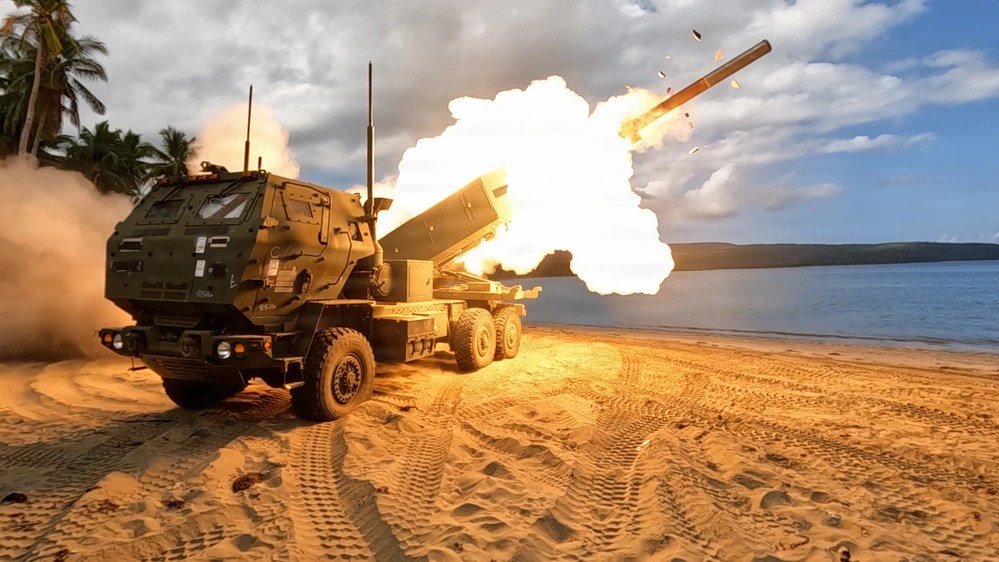
“Humans may not think accurately about geography, but even geographically inaccurate thought is still geographical. Strategy and politics must be done within geography. They cannot help but be influenced by ideas, and physical constraints that reasonably are termed geographical. Geography is inescapable.”
-Colin S. Gray
Colin Gray’s perpsective on the inescapability of geography is not necessarily a new idea – the study of geography and the environment has a rich history dating back to ancient times, but it does illustrate the importance of the subject and its ability to permeate our everyday lives. For example, our morning commute often takes us through an elaborate road network from our home to our place of work. We transit through space observing the sights around us and perhaps stopping for coffee, all while obeying the rules of the road. This seemingly simple activity reflects a complex geographic system, the spatial relationship between the physical and human environments. We move through unique landscapes—desert, forest, mountains, or urban areas—and experience unique human systems such as roads, places of worship, housing developments, businesses, and other elements of the cultural landscape.
Now, zoom out from our daily commute analogy and apply it to debates relating to security. The same physical and human elements are factors in these discussions. The United States’ ongoing conflict with Iran has become increasingly centered around the Strait of Hormuz, a vital waterway for global trade, especially for oil and natural gas. Russia invaded Ukraine in 2022 on the basis that the Ukrainian and Russian people are the same, culturally, with a common heritage, language, and religion, and that the “Nazi” pro-western government in Kyiv needed to be replaced.
These two examples illustrate the importance of understanding the geography and environment that form the canvas upon which these conflicts unfold. The physical geography of the Strait of Hormuz presents a unique obstacle to transiting ships. They cannot simply bypass the Strait as it restricts the movement of any vessel transiting the Persian Gulf. Geography was a core element of Alfred Thayer Mahan’s treatise on sea power and its impacts on foreign policy and the economy. The Russian government continues to cite cultural similarities for its desire to pull Ukraine into its sphere of influence in Eastern Europe, as well as to provide a buffer against the North Atlantic Treaty Organization. The idea of a buffer and control of Eastern Europe could arguably be linked to Sir Alfred Mackinder’s “Heartland Theory” where he argued that, control of Eastern Europe would constitute world domination for the dominant power. Exploring the classic works of Mackinder and Mahan helps frame our understanding of an issue. In this instance, understanding the geography of Iran and Russia is critical to addressing security concerns in these areas.
The Applied Environmental and Geographic Insights for Security (AEGIS) is a new effort from West Point’s Department of Geography and Earth Sciences to examine these and future security challenges through environmental and geographic lenses, bridging research and practice to illuminate how spatial and environmental dynamics shape risk, conflict, war, and stability in a dynamic world. We aim to leverage the expertise of our department scholars, along with other academics, policy experts, and practitioners, to explore the geographic and environmental factors underpinning the world today.
Why now?
The world is continually changing. Borders remain in dispute and some nation-states, e.g., Taiwan, are under immense geopolitical pressure. Our critical minerals supply, a vital resource for our national security, is at risk. Competition over the Arctic, its lines of communication, and its resources is fierce. Interstate and intrastate (e.g., Burma, and India/Pakistan) conflicts continue to be an endemic part of the human experience. Each of these events is influenced by and influences the geography and environment.
What does an invasion of Taiwan look like from a geographic perspective? It will undoubtedly involve an amphibious joint forcible entry of some sort, which requires a thorough understanding of coastal processes—wave energy, tides, beach trafficability, and coastal engineering structures. How will the Central Mountain Range impact operations? Does the physical and human terrain lend itself to guerrilla or insurgent tactics? Will we see the same level of drone warfare in tropical rainforest biomes, where vegetation is denser compared to the temperate grasslands of Ukraine?
How are critical minerals and their subsequent mining, processing, and supply chain constrained by geography? Obviously, reserves are located in certain areas around the world, with China dominating processing and refinement. How will stockpiling these resources impact local populations? What implications do proven and unproven reserves have on the global economy?
How are changes in sea ice conditions creating new maritime routes and potential access to natural resources? How do these developments reshape geopolitical competition among Arctic and near-Arctic states? What new environmental and governance challenges will emerge?
And the list goes on.
Without understanding the environmental and geographic foundations of security challenges, any analysis risks being incomplete. AEGIS emerges in response to this need – to provide a forum where these perspectives are not peripheral, but central.
What makes us different?
Many platforms address security issues. What distinguishes AEGIS is its explicit focus on integrating environmental and geographic perspectives into security analysis.
First, AEGIS places geography and the environment at the forefront of analysis, rather than treating them as background conditions. Terrain, spatial relationships, environmental systems, and human-environment interactions are considered foundational topics.
Second, AEGIS is interdisciplinary by design. Security challenges rarely fit neatly within a single field. Addressing them requires insights from geography, environmental science, geospatial science, social sciences, and STEM disciplines. This platform seeks to bring those perspectives together in a coherent and accessible way.
Third, AEGIS aims to bridge the gap between academia and practitioners in a timely and topical manner. Too often, valuable insights remain confined to academic journals or are disconnected from policy and operational communities. AEGIS provides a space where scholars and practitioners can engage directly with one another.
Finally, AEGIS is forward-looking. This platform seeks to explore emerging issues at the intersection of environment, geography, and security—whether in rapidly urbanizing regions, contested maritime spaces, or environmentally sensitive areas.
We invite you to join the discourse!
This publication marks the beginning of AEGIS’s journey. We are actively seeking contributions from scholars, practitioners, analysts, industry leaders, policymakers, and others who are interested in exploring security issues through the lens of geography and the environment.
Submissions may include:
- Analytical essays on the relationship between the environment, geography, and contemporary security challenges
- Case studies illustrating the importance of geography and environment on security-related topics, operations, campaigns, and battles
- Methodological or theoretical contributions
- Unique applications of geospatial tools for security
- Reports from the field and practitioners
Contributors should aim to produce clear, rigorous, and accessible analysis that advances understanding of how environmental and geographic dynamics shape security outcomes.
Conclusion
As the global security environment becomes more complex, the importance of interdisciplinary approaches to analysis increases. Environmental and geographic perspectives do not replace traditional security frameworks, but they are essential to understanding the full picture. Geography and the environment are the canvas upon which affairs unfold. AEGIS provides a space for scholars and practitioners to examine these topics in a timely and topical manner. We look forward to the future discourse on this platform!
Mark Read is a Professor, United States Military Academy (PUSMA) and Department Head for the Department of Geography and Earth Sciences. He holds a Ph.D. and M.S. in Geography from Penn State University and a B.S. in Environmental Engineering from the United States Military Academy. Mark specializes in environmental security and policy.
Chris Fuhriman is a Professor, United States Military Academy (PUSMA) and Deputy Department Head for the Department of Geography and Earth Sciences. He holds a Ph.D. in Geography from the University of Utah, an M.S. in Geography from the University of Hawaii, and a B.S. in Geography from the United States Military Academy. Chris specializes in military geography, terrorism, and conflict.
David Leydet is an Assistant Professor of Geography in the Department of Geography and Earth Sciences at USMA. He holds a Ph.D. in Geography from the University of Utah, an M.S. in Geography from Oregon State University, a Master’s in Operational Science from the U.S. Army’s Command and General Staff College, and a B.A. from Norwich University. Dave specializes in conflict, environmental security, High Mountain Asia, the cryosphere, and machine learning methods.